Planning Visual
Biševo, off Vis
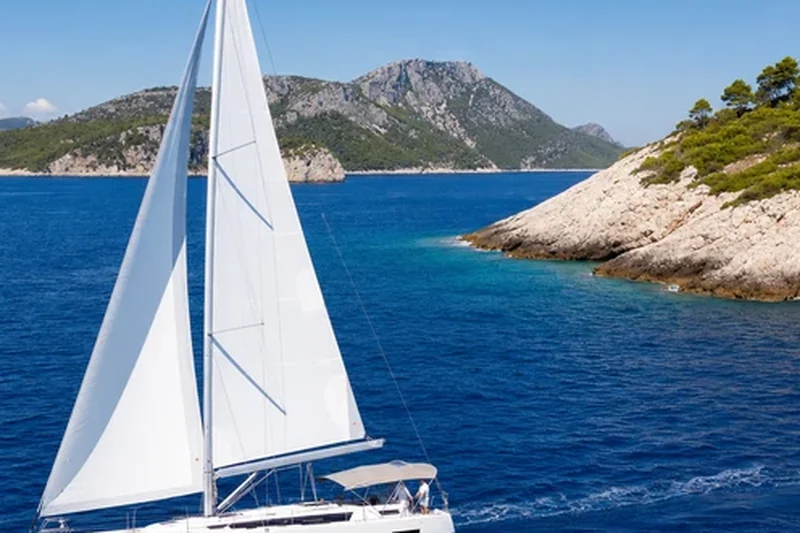
The cave sits on Biševo's east coast. Komiža on Vis is the nearest harbour; Split is roughly 50 nm away.
Croatia's Blue Cave sits on Biševo, off the western tip of Vis — a long, weather-exposed day from the mainland with a ticketed entry and a light window that decides whether the trip works. This guide covers where to depart from, when to arrive, and what your rental boat is not allowed to do.
The cave sits on Biševo's east coast. Komiža on Vis is the nearest harbour; Split is roughly 50 nm away.

Departing Hvar rather than Split shortens the open-water leg and suits private charters covering both caves and Vis.
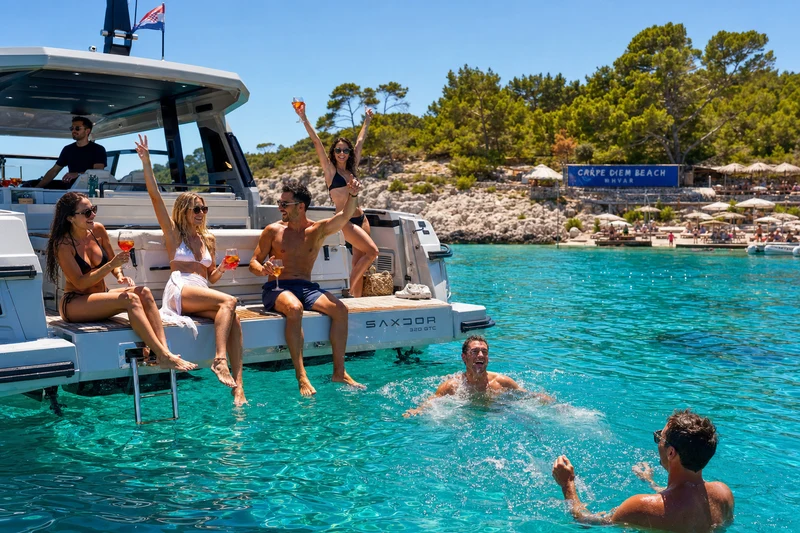
No artificial lighting: the colour is refracted sunlight, so arrival hour matters more than boat speed.
Quick planning answer
Croatia's Blue Cave is on Biševo, off Vis — not to be confused with Montenegro's. It needs an organised excursion or a skippered charter, never a licence-free rental, and the trip lives or dies on reaching the cave near midday when the refracted light peaks. The entry ticket is separate and usually cash-only.
Two caves on this coast are sold under the same name, and booking the wrong country is a real and recurring mistake. Croatia's Blue Cave is Modra špilja on Biševo, a small island off the western tip of Vis, roughly 50 nautical miles from Split. Montenegro's Blue Cave is Plava špilja, on the Luštica peninsula at the mouth of the Bay of Kotor, and is reached from Kotor, Tivat or Herceg Novi in a fraction of the time. This page is about Biševo. If you are heading to Montenegro, the Bay of Kotor boat tour guide covers the other one.
The distinction matters commercially as well as geographically. Biševo is a long, weather-exposed day from any mainland base and the cave has a timed, ticketed entry controlled by park staff. Montenegro's is a short bay run with no comparable gatekeeping. A "Blue Cave day trip" priced like a half-day excursion is almost certainly not the Croatian one.
Modra špilja has no artificial lighting. The colour comes from sunlight entering through a submerged opening below the main entrance, refracting through the water and lighting the chamber from beneath. That means the effect is entirely dependent on the sun's angle: it builds through the mid-morning, peaks around the middle of the day, and fades again. Arrive outside that window and you are looking at a dim grey cave.
This single fact should drive your entire booking decision. Every operator on this coast knows it, which is why the cave is busiest in the middle of the day and why boats queue. A departure that reaches Biševo at the right hour and a departure that reaches it at the wrong one cost roughly the same and deliver completely different days.
| Departure point | What the day looks like | Best for |
|---|---|---|
| Split | The longest run, usually 10–11 hours, almost always packaged as a five-island tour with Hvar, the Pakleni islands and a lagoon stop. | Visitors based in Split with one day to give it. You are paying for distance as much as for the cave. |
| Trogir | Same tour, same operators, but boarding closer to Split airport and without the early drive into the city. | Anyone staying in Trogir or arriving the night before. See the Trogir boat guide. |
| Hvar | A markedly shorter crossing, and the base for private departures that pair the Blue Cave with the Green Cave and Vis. | The strongest option if the cave is the actual goal rather than one stop among five. |
| Komiža, Vis | The closest harbour to Biševo — a short, sheltered hop rather than an open-sea leg. | Anyone already on Vis. See the Vis boat rental guide. |
Croatia's licence-free rental tier — under 5 metres, under 5 kW, within 500 metres of shore — does not reach Biševo from anywhere, including Komiža. The crossing is a genuine island-to-island leg across open water, and the cave itself has timed entry and sea-state rules enforced on site. There is no version of a self-drive beach rental that legally or safely gets you there.
That is not a technicality operators quietly ignore. It is why every Blue Cave product on the market is either an organised excursion boat or a skippered private charter, and why the honest advice is to stop looking for a self-drive workaround and book the boat that is allowed to make the trip.
The cave charges its own entry ticket on top of whatever you pay for the boat, and operators generally collect it in cash on the day rather than including it in the online price. As listed by the operator on GetYourGuide and checked on 4 September 2026, that ticket runs €18 per person from 1 April to 19 June, €24 per person from 20 June to 10 September, and €18 per person again from 11 September to 31 October.
Treat those as indicative and seasonal rather than fixed — they are set by the park, not the boat operator, and they change. The practical point is the one that catches people out: carry euros in cash. A group of four arriving in peak season with only cards is a problem solved at the boat, badly.
Prices checked 4 September 2026. Confirm on the operator's page before booking.
The whole argument for private is timing. You go when the light is right, you leave a stop early if it is packed, and you are not waiting on eleven other people at every quay.
Materially cheaper, and on a well-run boat perfectly good. Ask about sun cover and seating — a ten-hour day on unshaded bench seats is a long day.
Biševo is exposed. Operators cancel or reroute when the sea is up, so leave a spare day in the itinerary rather than making this your last one.
Answers for Search and AI Planning
Modra spilja is on Bisevo, a small island off the western tip of Vis in central Dalmatia, roughly 50 nautical miles from Split. It is not the same cave as Montenegro's Blue Cave, which sits on the Lustica peninsula at the mouth of the Bay of Kotor and is reached from Kotor, Tivat or Herceg Novi. Booking the wrong country is a common mistake, and the giveaway is duration: the Croatian cave is a full-day commitment from the mainland, the Montenegrin one is a short bay run.
Around the middle of the day. The cave has no artificial light — the colour comes from sunlight entering through a submerged opening and refracting up through the water, so the effect depends entirely on the sun's angle. It builds through the mid-morning, peaks near midday and fades afterwards. This is also why the cave is busiest then and why boats queue. A departure timed to reach Bisevo in that window and one that does not cost about the same and produce very different days.
No. Croatia's licence-free tier covers boats under 5 metres and under 5 kW within 500 metres of shore, and Bisevo is a genuine open-water crossing from any harbour, including Komiza on Vis, which is the closest. The cave also has timed entry and sea-state rules enforced on site. Every Blue Cave product on the market is either an organised excursion boat or a skippered private charter, and that is the reason.
Private Speedboat: Blue and Green Caves with Vis
The private option out of Hvar, covering both caves and Vis island. The whole-boat version, which is what buys you the freedom to be at Biševo when the light is right rather than when the schedule says.
See Availability on GetYourGuide →Blue Cave, Hvar and Five Islands — from Split or Trogir
The full-day five-island run, boarding at either Split or Trogir. Twelve spots, with a private upgrade available. Remember the Blue Cave entry ticket is paid separately in cash on the day.
See Availability on GetYourGuide →Blue Cave and Hvar by Luxury Cabin Boat
A cabin boat rather than an open speedboat, with hotel pickup in Split — worth the difference on a ten-hour day if shade and a seat back matter to you.
See Availability on GetYourGuide →From Hvar: Blue Cave Group Speedboat, Full Day
The budget option if you are already on Hvar: a twelve-person speedboat departing Trg Sv. Stjepana, with a Pakleni islands stop at Palmižana.
See Availability on GetYourGuide →Hire a Car in Croatia
Compare rental car prices from trusted suppliers. Essential for reaching marinas, airports, and coastal towns that aren't served by ferry or bus.
Compare Car Hire Prices →